
Corporate Wellness Dubai: How Local Laws Are Redefining Employee Wellbeing in 2025


If you’ve worked in HR long enough, you’ve probably seen “corporate wellness” swing between trend and necessity. But in Dubai, 2025 marks a turning point. Wellness has become more than a perk, it’s now part of compliance, performance, and talent strategy.
With the UAE extending mandatory health insurance to all private sector employees, a new Federal Mental Health Law, and the annual Midday Break keeping worker safety in focus, organisations can no longer afford to treat wellbeing as an optional extra. The shift is clear: wellness in Dubai is now a business competency, not a luxury.
This post explores what’s driving that change, and how HR teams can build wellness programs that are both compliance-smart and culturally resonant.
Why corporate wellness in Dubai is different
Dubai’s energy is unmatched, fast, ambitious, and international. But that pace also demands a unique approach to employee care. Wellness here must operate within a framework of local labour laws, seasonal realities, and cultural expectations.
For instance, the new UAE-wide health insurance law that came into effect on 1 January 2025 means every employer, no matter the emirate, is responsible for ensuring medical coverage. Gone are the days when wellness meant a few gym memberships and workshops, now, health insurance itself forms the foundation of every wellbeing strategy.
At the same time, the Midday Break regulation (which bans outdoor work from 12:30 to 3:00 p.m. each summer) reminds us that wellbeing can’t be separated from physical safety. HR teams managing outdoor or site-based workforces must weave hydration, heat training, and adjusted shifts into their policies — it’s both the law and a moral imperative.
Finally, the introduction of the Federal Mental Health Law in May 2024 has quietly redefined corporate responsibility. It legitimises mental wellbeing as a workplace issue, urging employers to offer psychological support and referral pathways, areas where Employee Assistance Programs (EAPs) and telehealth can make a real difference.
In short, the wellness conversation in Dubai is now a blend of legal compliance, proactive care, and cultural understanding.
The seven wellness trends shaping Dubai’s workplaces
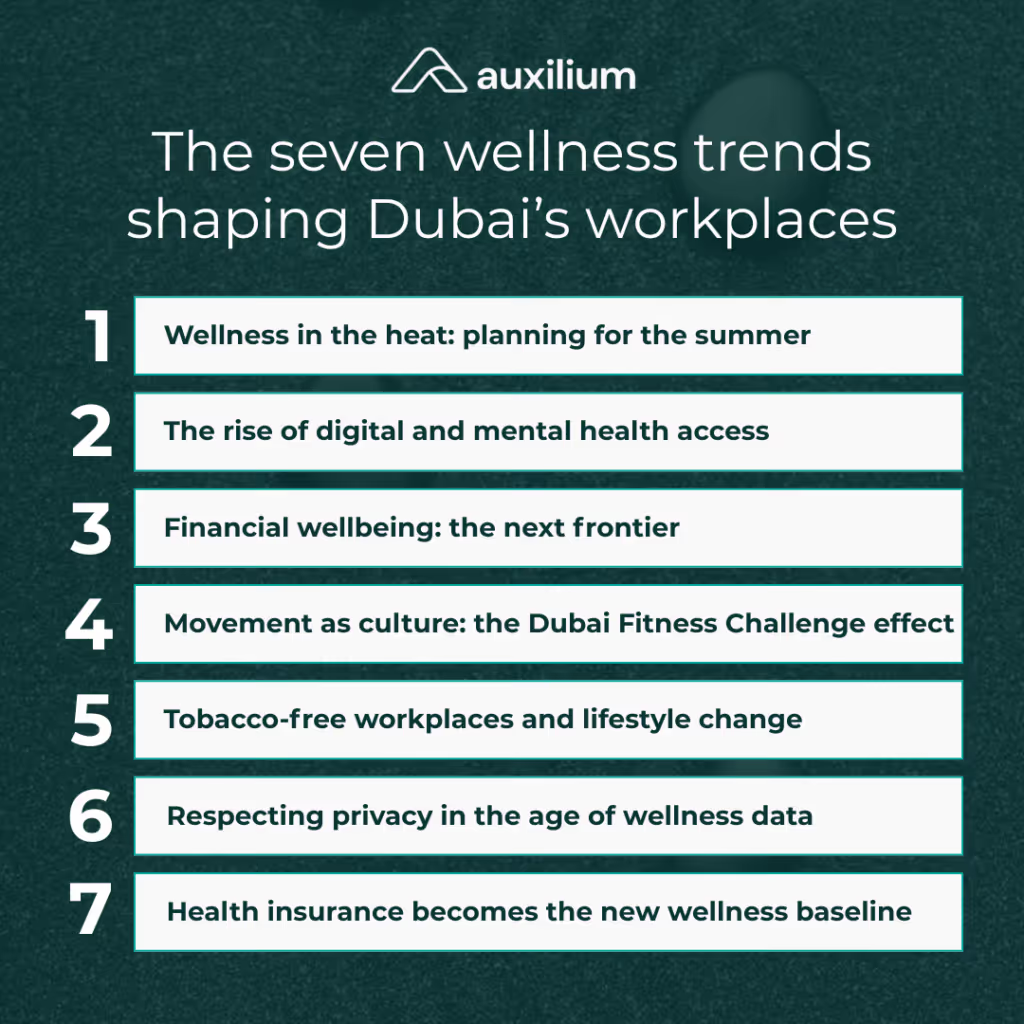
Every city has its own rhythm, and Dubai’s is particularly forward-looking. The corporate wellness landscape here is being shaped by seven key trends that blend policy, technology, and human connection.
Health insurance becomes the new wellness baseline
For years, Dubai led the UAE in enforcing health insurance for residents. But with mandatory coverage now extended nationwide, employers must take a more strategic view.
Rather than viewing insurance as a cost, progressive HR teams are using it as a data-backed wellness tool, analysing claims trends, offering preventive screenings, and aligning coverage to lifestyle risks such as diabetes and cardiovascular issues.
This isn’t just compliance; it’s smart care that saves money and builds trust.
Wellness in the heat: planning for the summer
If you’ve ever tried to walk outside during a Dubai July, you understand why the Midday Break law matters. From 15 June to 15 September, outdoor work must stop during peak heat hours, a rule that’s both humanitarian and strategic.
Companies that treat this as more than a checklist item, by investing in cooling stations, hydration policies, and worker education, not only stay compliant but also protect morale and productivity. Wellness here is about foresight: designing safety around the climate, not despite it.
The rise of digital and mental health access
Mental health is no longer the unspoken subject it once was. Since the Federal Mental Health Law took effect, many employers have started to offer telehealth-based counseling, allowing staff to connect confidentially with licensed professionals in Arabic or English.
In 2023 alone, Dubai recorded over 375,000 telehealth consultations, proof that remote care is becoming a lifeline for employees who might not otherwise seek help.
As HR professionals, we can normalize these tools by integrating them into EAPs, training managers to spot early signs of distress, and measuring outcomes with empathy rather than stigma.
Financial wellbeing: the next frontier
Financial stress is one of the biggest contributors to burnout, and in the GCC, it often stems from uncertainty around end-of-service benefits (EOSB).
Dubai’s DEWS savings scheme, along with the new federal voluntary savings program, is transforming how employees plan for the future. By running simple “Know Your Gratuity” workshops and offering access to structured savings platforms, companies can improve retention and loyalty.
Financial wellbeing, it turns out, is emotional wellbeing in disguise.
Movement as culture: the Dubai Fitness Challenge effect
Every November, the Dubai Fitness Challenge turns the city into a giant playground. Over 2.7 million people took part in 2024, a 14% increase from the year before.
Smart employers are tapping into this civic momentum. Whether through in-house step challenges, cycling teams, or flexible lunch-hour workouts, they’re linking physical wellbeing with social connection. It’s a simple truth: when people move together, they feel they belong.
Tobacco-free workplaces and lifestyle change
While smoke-free policies have existed for years, the Ministry of Health’s updated tobacco-free workplace guidelines now give employers the structure to act.
Many companies are pairing policy enforcement with cessation coaching and nicotine-replacement support. It’s a small but powerful shift from punishment to empowerment, showing that wellbeing isn’t just about compliance but about helping people make lasting changes.
Respecting privacy in the age of wellness data
As wellness programs become more data-driven, privacy has become a critical design principle. Dubai’s HR leaders are learning to track outcomes without overreaching — focusing on participation rates, claims data, and satisfaction surveys rather than individual health metrics.
The best programs balance analytics with dignity. They make employees feel safe, not surveilled.
Designing a Dubai-ready wellness program
Creating an effective wellness strategy in Dubai isn’t about copying global models, it’s about grounding your program in local realities. Here’s a simple framework that works across sectors:
Start with a compliance audit: ensure every employee (and their dependents, where applicable) is covered under the new insurance mandate, and that all outdoor staff are accounted for in your heat safety plan.
Next, define your three wellness pillars, physical, mental, and financial health, each with tangible actions: annual screenings, confidential telehealth sessions, and EOSB education.
When selecting vendors, prioritize local alignment. For instance, check that your telehealth partner hosts data in the UAE, and your insurance provider meets DHA standards.
Finally, communicate your program clearly, in both English and Arabic, and train managers to model wellbeing themselves. Culture always follows leadership.
Challenges to watch
Dubai’s wellness ecosystem is evolving fast, and with that comes complexity. HR teams must juggle different rules for free zones versus mainland, ensure vendor compliance, and stay ahead of data privacy norms. But the payoff is worth it, compliance-driven wellness programs build reputational capital and resilience in equal measure.
The bigger picture: compliance meets culture
Corporate wellness in Dubai is no longer about ticking boxes. It’s about integrating wellbeing into the fabric of employment, from visa-linked health insurance to daily work rhythms and long-term savings habits.
The employers who will lead in 2025 are those who treat wellness not as a campaign, but as a core capability. They understand that compliance creates consistency, and consistency builds trust.
And in a city as ambitious as Dubai, trust is the real competitive edge.
At Auxilium, we help businesses handle the operational complexities, payroll, visa processing, and end-of-service obligations, so HR leaders can focus on what truly drives engagement: people. If you’re expanding or restructuring your workforce in the UAE, let’s talk about how to make your employment model both compliant and human-centred.
Frequently Asked Questions
Corporate wellness covers the systematic approach of an organisation to support employees’ holistic health, physical, mental, emotional and sometimes financial, through policies, programmes and workplace culture improvements that foster well-being, productivity and engagement.
A wellness program is designed to promote healthier behaviours, reduce health risks and improve overall employee well-being (body, mind and sometimes finances), helping organisations boost productivity, reduce absenteeism and create a positive work culture.
A wellness workshop is a focused, interactive session (often small-group) offered by an organisation (or third-party) that educates and equips participants with practical tools, skills or insights around particular dimensions of well-being—such as stress management, mindfulness, self-care routines or physical health.


Schedule a Free Consultation
Tell us what you’re looking for and we’ll handle the rest.
Let's talk!
Please provide your details, and one of our specialists will promptly reach out to you.