
Remote Work in Dubai: How to Build and Manage a Compliant Remote Team


There’s a reason Dubai keeps showing up on “best cities for remote work” lists. It offers year-round sunshine, world-class infrastructure, and a tax-friendly environment that draws professionals from every continent.
But while employees see opportunity, employers often see confusion. How do you legally hire someone who’s “remote in Dubai”? What if they’re on a freelance visa, or the new “Virtual Work” visa? And do you still need to follow UAE labour laws if your team works from home?
These are the questions many global companies are asking right now, and getting them wrong can lead to costly compliance mistakes. This guide breaks down how remote work in Dubai actually works, how it differs from freelancing, and the easiest, most compliant way to build your remote team in the UAE.
What “Remote Work in Dubai” Really Means
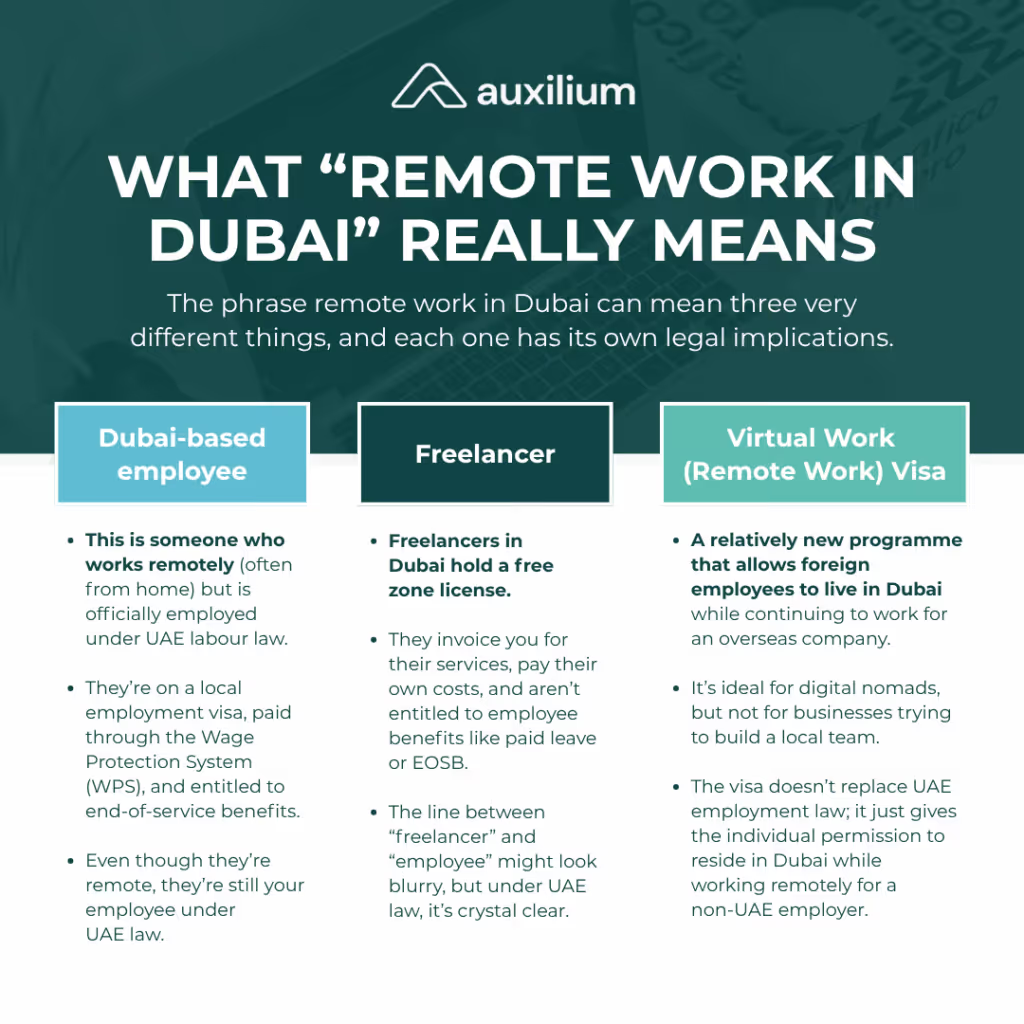
The phrase remote work in Dubai can mean three very different things, and each one has its own legal implications.
First, there’s the Dubai-based employee. This is someone who works remotely (often from home) but is officially employed under UAE labour law. They’re on a local employment visa, paid through the Wage Protection System (WPS), and entitled to end-of-service benefits. Even though they’re remote, they’re still your employee under UAE law.
Then there’s the freelancer, who operates more like a small business. Freelancers in Dubai hold a free zone licence, such as from Dubai Media City or Dubai Internet City, and can work with multiple clients. They invoice you for their services, pay their own costs, and aren’t entitled to employee benefits like paid leave or EOSB. The line between “freelancer” and “employee” might look blurry, but under UAE law, it’s crystal clear. Misclassify someone and you could face fines or blocked visas.
Finally, there’s the Virtual Work (Remote Work) Visa, a relatively new programme that allows foreign employees to live in Dubai while continuing to work for an overseas company. It’s ideal for digital nomads, but not for businesses trying to build a local team. The visa doesn’t replace UAE employment law; it just gives the individual permission to reside in Dubai while working remotely for a non-UAE employer.
In short:
- A remote employee is your responsibility under UAE labour law.
- A freelancer is an independent business.
- A Virtual Work Visa holder is a foreign employee living temporarily in Dubai.
Understanding these distinctions is the first step toward compliance.
The Legal Foundation: UAE Labour Law and Remote Work
When it comes to employment, the UAE is clear: if you’re employing someone in the country, you must comply with Federal Decree-Law No. 33 of 2021, the UAE Labour Law.
That means every employee, whether they work in an office, from home, or in a café, must have a compliant, fixed-term contract. Employers are responsible for providing health insurance, respecting working-hour limits, and ensuring safe working conditions, even in remote settings.
A remote arrangement doesn’t change the relationship, it only changes where the work is done. So, if you hire someone in Dubai to work remotely, you still need to meet every legal obligation a local employer would.
This is where many companies stumble. They assume “remote” means “outside the system,” but the law views it differently. Remote work is simply another way of working, not an exemption from compliance.
Payroll and WPS: The Rule You Can’t Ignore
If your company employs people in Dubai, you’ll quickly encounter the Wage Protection System (WPS). This is the UAE’s national payroll monitoring system, ensuring that salaries are paid on time and in full through approved banks or exchange houses.
Every mainland employer, and many free zones, must use WPS. Payments must match contract terms, and late or missing payments can lead to fines or blocked work permits.
For remote employees in Dubai, this means one thing: you can’t just wire salaries to a foreign account and call it a day.
If you employ them under a UAE contract, you need to run payroll through WPS, or work with a partner, such as an Employer of Record (EOR), that can handle this for you.
It’s a simple rule, but a critical one. Getting it wrong can stop your hiring plans overnight.
End-of-Service Benefits: From Gratuity to Modern Savings
The UAE’s end-of-service benefit (EOSB) system is another key requirement for employers. Traditionally, employees earned a lump-sum gratuity payment when leaving a company.
Recently, however, the Ministry of Human Resources and Emiratisation (MoHRE) introduced a voluntary Alternative End-of-Service Savings Scheme, a more modern system where employers contribute to an investment fund each month.
Meanwhile, employees in the DIFC (Dubai International Financial Centre) are automatically covered by the DEWS savings plan, which replaced the old gratuity model.
For employers managing a remote team in Dubai, this means you must decide how you’ll handle EOSB from the start, and make it clear in every employment contract. The choice between gratuity and savings contributions depends on your structure, but both require proper documentation and monthly accounting.
Freelancer or Remote Employee: Why the Distinction Matters
It’s tempting to classify Dubai-based workers as “freelancers” to avoid payroll and visa administration, but this shortcut is risky. Freelancers are legally independent; they work for multiple clients, issue invoices, and control their hours and methods.
If your company sets working hours, provides equipment, and directs day-to-day work, that person is, in the eyes of UAE law, an employee, not a freelancer.
Misclassification isn’t just a technical issue; it’s a compliance failure. It can lead to fines, visa cancellations, and reputational harm. The better path is clarity: decide early whether you’re engaging freelancers for project work, or building a committed remote team, and structure accordingly.
The Virtual Work Visa: Great for Talent, Not for Hiring
Dubai’s Virtual Work (Remote Work) Visa is one of the most innovative programmes of its kind. It allows qualified professionals to live in Dubai for up to 12 months while continuing to work for their overseas employer.
For individuals, it’s an incredible lifestyle option. For employers, it’s a legal grey area if misunderstood.
The visa doesn’t grant you the right to employ someone in the UAE. It simply allows your existing employee to reside in Dubai while remaining on your foreign payroll. You can’t use this route to avoid UAE labour law if you’re building a local team. It’s about residence, not employment.
If your goal is to have staff physically located in Dubai but working directly for your company, you’ll still need a local employment structure, either by setting up an entity or partnering with an EOR.
Building a Remote Team in Dubai: How to Do It Right
Hiring remotely in Dubai doesn’t have to be complicated, but it does need to be structured properly.
The process starts with clarity. Decide whether each role will be a full employee, a freelancer, or an overseas employee living in Dubai under the Virtual Work Visa. From there, you can map the right compliance steps:
- Choose your jurisdiction. Most employers hire under mainland (MOHRE) rules or a free zone such as DIFC. Each has different payroll and EOSB frameworks.
- Set up compliant contracts. UAE law requires fixed-term contracts with clear clauses on remote work, hours, equipment, and data security.
- Handle visas correctly. Use either your company’s sponsorship or a local EOR’s. Freelancers must hold their own valid licence.
- Activate payroll and benefits. Run WPS-compliant payroll and establish EOSB or savings contributions from day one.
- Codify your policies. Document home-working standards, H&S responsibilities, and data security expectations.
When done right, remote employment in Dubai can be seamless, and incredibly effective.
Managing Remote Teams: Beyond the Legal Basics
Once compliance is handled, the focus shifts to management and culture. Remote teams succeed when they combine clear structure with human connection.
Define working hours that balance UAE time zones with your global operations. Provide reliable tools, from laptops to high-speed internet support, and invest in strong data protection policies. The UAE places increasing emphasis on cybersecurity and confidentiality, even in remote settings.
Finally, remember that health and safety obligations don’t stop at the office door. Employers remain responsible for ensuring a safe work environment, including at home. Simple self-assessments and checklists go a long way toward meeting those standards.
A Note on DIFC Employees
If your team is employed through the DIFC, you’ll be operating under a slightly different regime. The DIFC’s DEWS savings plan replaces traditional gratuity with monthly employer contributions into a managed fund.
For many tech and finance firms, DEWS offers a more predictable and transparent benefits structure, but it must be correctly administered. Be sure your contracts and payroll provider understand the difference between DIFC and mainland rules.
Why Many Global Companies Choose an Employer of Record (EOR)
For companies that don’t yet have a UAE entity, an Employer of Record is the fastest and most compliant way to build a remote team in Dubai.
Through Auxilium, you can hire, onboard, and pay remote employees in full compliance with local laws, without setting up a local company. We handle everything: visa sponsorship, WPS payroll, end-of-service management, and health insurance.
This model lets you focus on scaling your business, while we take care of the employment infrastructure behind the scenes.
At Auxilium, we specialise exclusively in the GCC, the UAE, Saudi Arabia, Kuwait, Oman, Bahrain, and Qatar. That focus means we understand every nuance of regional labour law, localisation rules, and payroll systems, so you don’t have to.
Dubai offers an unbeatable base for remote work, but compliance isn’t optional. Whether you’re hiring one remote employee or building a regional hub, it’s essential to know which employment model fits your needs, and follow the rules that come with it.
If you want to build a compliant remote team in Dubai without the red tape, Auxilium’s EOR solution gives you the simplest route to do it.
We manage the payroll, visas, contracts, and end-of-service obligations so your business can grow confidently across the Gulf.
Let’s talk about your next remote hire in Dubai.
Frequently Asked Questions
Remote staffing solutions refer to strategies and services that allow businesses to hire, onboard and manage employees who work entirely outside the company’s physical office—from anywhere in the world. They typically involve accessing global talent; handling recruitment, training and payroll remotely; and enabling flexible, scalable workforce models without traditional office infrastructure.
Yes — you can work remotely from the United Arab Emirates (UAE) provided you comply with visa, labour-law and tax rules: the UAE allows remote work and has issued legislation covering remote employment contracts and digital-work visas; for example, remote workers may need to obtain a “Virtual Work Residence” visa, maintain health insurance, and ensure they are not providing services to local employers without a proper work permit.
Yes — using an Employer of Record (EOR) is highly suitable for remote-only teams because it enables your company to hire employees in different regions or countries without establishing a local legal entity in each location. The EOR handles employment contracts, payroll, taxes, benefits and local compliance while your company manages performance and day-to-day work.



Schedule a Free Consultation
Tell us what you’re looking for and we’ll handle the rest.
Let's talk!
Please provide your details, and one of our specialists will promptly reach out to you.