
Nafis Program UAE: Salary Support & Training Subsidies


If you run a business in the UAE, you’ve probably heard a lot about Emiratisation lately. What’s less discussed, but increasingly important, is the Nafis program, the government’s powerful set of incentives designed to make hiring Emiratis more attractive, affordable, and sustainable for private employers.
From salary support and pension relief to on-the-job training subsidies, Nafis aims to encourage local hiring by making it financially viable. In this article, we’ll unpack what Nafis really offers, how it links to the UAE’s Emiratisation goals, and how companies without a local entity or spare visa quota can still participate through an Employer of Record (EOR) partner like Auxilium.
What the Nafis Program Is, and Why It Exists
The Nafis Program (Emirati Talent Competitiveness Programme) was launched as part of the UAE’s “Projects of the 50,” a national initiative to empower Emiratis in the private sector and diversify the country’s economy.
While Emiratisation sets the targets, Nafis provides the tools—a suite of salary supplements, training opportunities, and social benefits designed to bridge the gap between government ambitions and employer realities.
For business leaders, that means Emiratisation is no longer just a compliance checkbox. Through Nafis, it’s becoming an achievable, financially sensible part of workforce planning.
Breaking Down Nafis: Real Benefits, Real Cost Savings
When you look closely, Nafis is less about bureaucracy and more about partnership. It helps employers cover part of the cost of hiring and retaining Emiratis while giving job seekers pathways to real career growth.
Salary Support Scheme
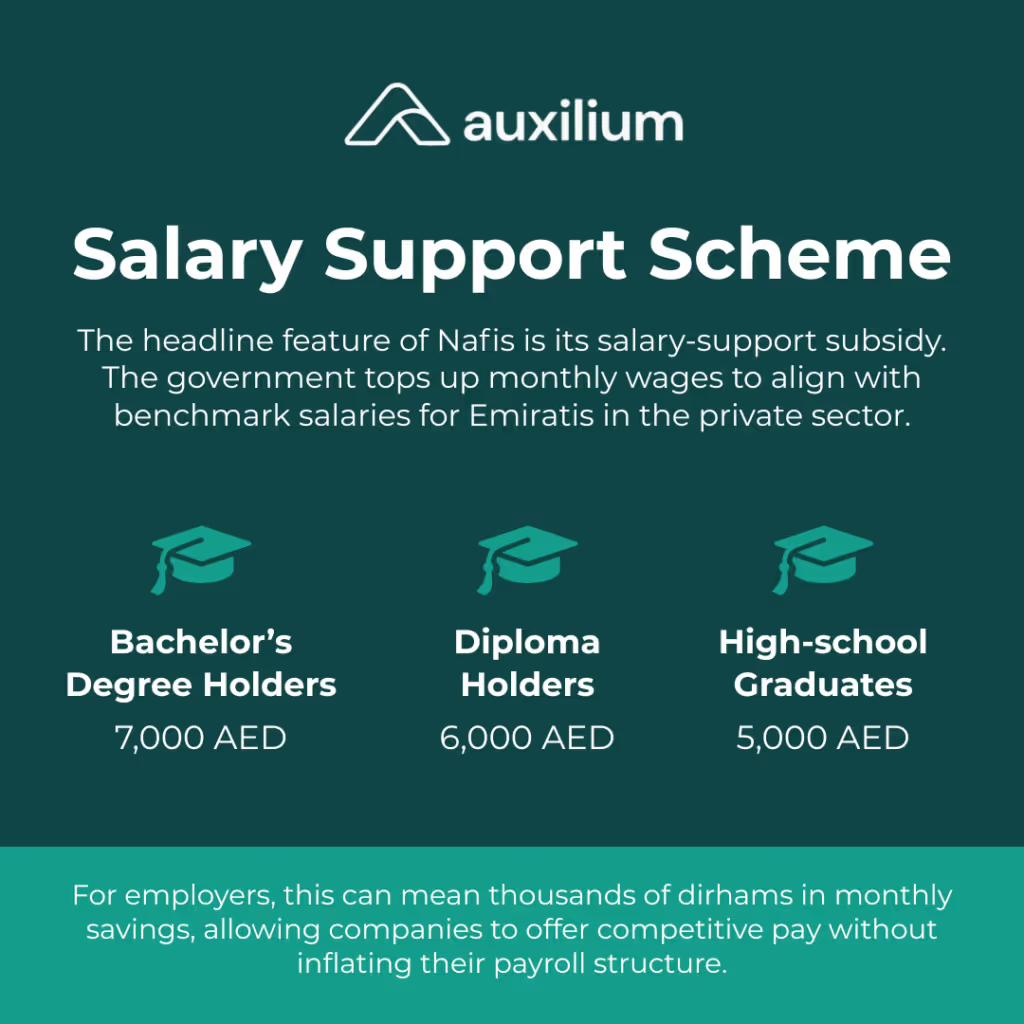
The headline feature of Nafis is its salary-support subsidy. The government tops up monthly wages to align with benchmark salaries for Emiratis in the private sector, up to AED 7,000 for bachelor’s degree holders, AED 6,000 for diploma holders, and AED 5,000 for high-school graduates.
For employers, this can mean thousands of dirhams in monthly savings, allowing companies to offer competitive pay without inflating their payroll structure.
Pension Contribution Relief
Pension obligations can be a significant hidden cost in local hiring. Nafis addresses this through a government contribution of 2.5% toward pension payments for eligible Emirati employees earning below AED 20,000. This reduces the employer’s cost burden while still ensuring long-term benefits for Emirati talent.
Child Allowance Scheme
Work-life balance and family support are deeply valued in the UAE, and Nafis reinforces that through a child allowance, AED 800 per child, up to AED 3,200 per month. This benefit strengthens Emirati employees’ total rewards package, helping private companies compete with the traditionally higher benefits of public-sector roles.
Training & Apprenticeship Pathways
Beyond direct financial aid, Nafis also supports on-the-job training programs and apprenticeships. These provide structured, government-backed pathways for new graduates to gain private-sector experience—with the salary partially funded.
For employers, it’s an opportunity to build a sustainable Emirati talent pipeline without absorbing full costs from day one.
Nafis and Emiratisation: Understanding the Connection
To understand Nafis properly, you have to look at it in the context of Emiratisation, the UAE’s long-term effort to increase the number of Emiratis working in the private sector.
The Current Targets
- Companies with 50 or more employees must increase their Emirati workforce in skilled roles by 2% each year until 2026.
- Companies with 20–49 employees in select sectors must hire one Emirati in 2024 and another in 2025, bringing their total to two.
The Financial Consequences
Falling short of these targets is no longer optional. The Ministry of Human Resources and Emiratisation (MoHRE) enforces fines of AED 96,000 per missing Emirati for 2024, rising to AED 108,000 in 2025.
When you do the math, it becomes clear why Nafis exists: the cost of non-compliance is now far higher than the cost of compliant hiring. By taking advantage of Nafis subsidies, companies can offset salary costs and achieve their Emiratisation targets simultaneously.
How Employers Can Practically Use Nafis
Implementing Nafis within your hiring plan doesn’t have to be complicated. It starts with understanding eligibility and building it into your recruitment strategy early, not as an afterthought when compliance deadlines loom.
- Identify Eligible Roles: Focus on skilled job categories that count toward Emiratisation quotas.
- Model the Subsidy: Calculate how salary support and pension relief affect your total employment cost.
- Post Vacancies through Nafis: This ensures your jobs are visible to registered Emirati candidates.
- Integrate Training Pathways: Use Nafis apprenticeship programs to build a future talent pipeline.
- Set Up Compliance Systems: Ensure payroll is WPS-registered and pensions are correctly handled through GPSSA or ADRPBF.
- Track Your Quotas: Monitor progress regularly so you’re not facing last-minute fines or rushed hires.
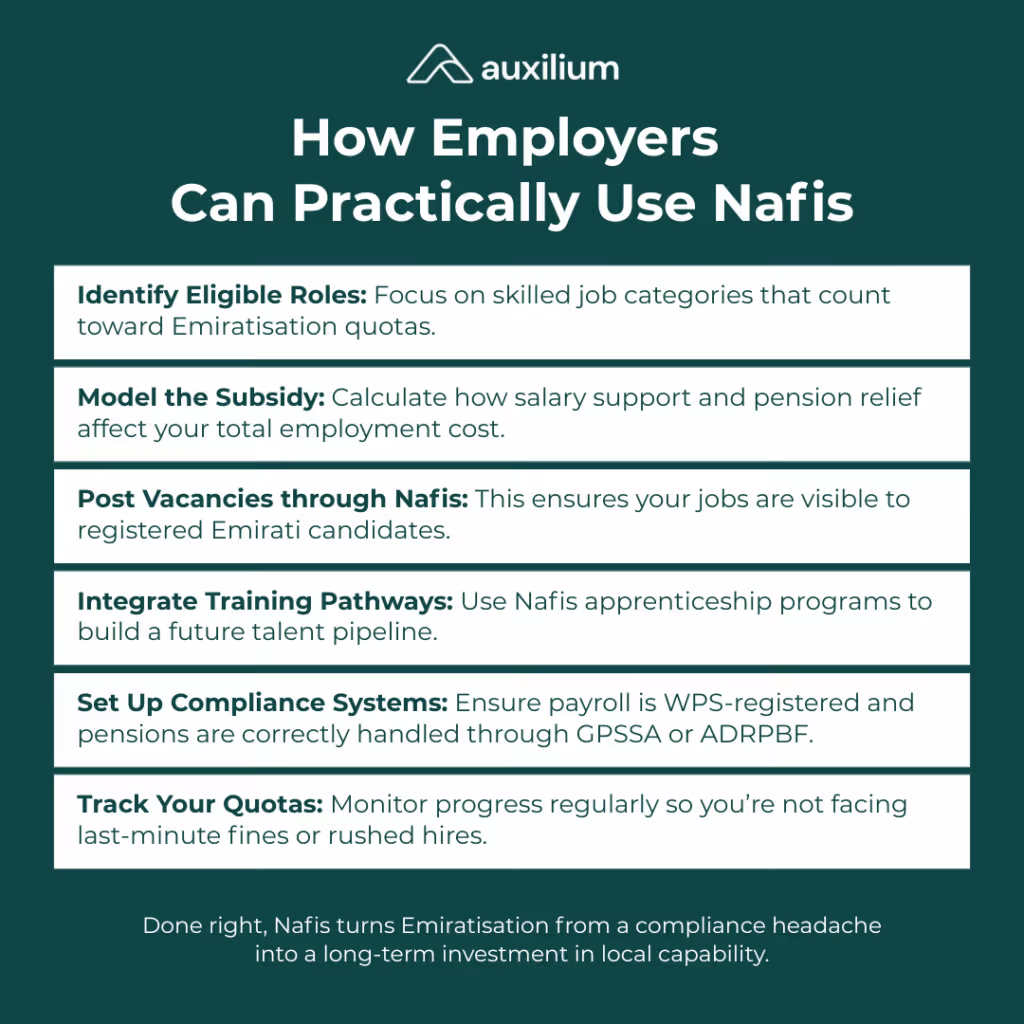
Done right, Nafis turns Emiratisation from a compliance headache into a long-term investment in local capability.
Planning Your Workforce Around Nafis
Companies that treat Nafis as a strategic advantage—not an obligation—gain the most.
The key is early planning and accurate cost forecasting.
Start by mapping your future workforce and identifying which roles could be filled by Emiratis. Then, model Nafis salary and pension support into your budget. Use the program’s training tracks to build entry-level pipelines, particularly for functions that are difficult to localise quickly.
Avoid the common mistake of waiting until Q4 to meet your quota—by then, demand spikes and candidate supply tightens. Instead, integrate Emiratisation goals into your annual hiring plan and monitor progress quarterly.
When done right, you’ll meet your compliance goals while nurturing a sustainable Emirati workforce that’s aligned with your business objectives.
When You Can’t Hire Directly: The EOR Advantage
Of course, not every company can hire locally right away. Some lack a UAE entity; others have reached visa capacity or operate in free zones with restrictions.That’s where an Employer of Record (EOR) comes in.
An EOR allows you to hire and pay employees legally in the UAE, even if you don’t have your own local entity. The EOR becomes the legal employer, handling everything from visa sponsorship and WPS payroll to end-of-service calculations and health insurance, while you manage the employee’s day-to-day work.
At Auxilium, this is exactly what we do—specialising exclusively in the GCC region, not globally. With two decades of experience across UAE, Saudi Arabia, Kuwait, Oman, Bahrain, and Qatar, we help international and regional companies grow fast while staying compliant in each jurisdiction.
The Business Case for Acting Now
For many organisations, Nafis is still viewed as a policy initiative. But for those paying attention, it’s a clear competitive advantage. Companies that embrace the program now can hire qualified Emiratis at reduced cost, avoid mounting penalties, and strengthen their employer brand in a market that increasingly values national participation.
If you’re operating in the UAE and struggling with entity setup, payroll complexity, or visa quotas, there’s a straightforward path forward.
Auxilium’s Employer of Record (EOR) service manages everything, from WPS payroll and visas to pensions and end-of-service settlements, so you can focus on growth, not red tape.
Let’s discuss how you can integrate Nafis incentives into your UAE hiring strategy today.
Frequently Asked Questions
The Nafis Program is a federal initiative in the United Arab Emirates (UAE) designed to increase the competitiveness of Emirati nationals and boost their participation in the private sector by providing training, up-skilling, financial incentives and employer support. Its objectives include creating 75,000 private-sector jobs for Emiratis by 2025 and allocating about AED 24 billion to support this goal.
Under the Nafis Salary Support Scheme, eligible Emiratis working in private companies may receive a monthly top-up of up to AED 8,000 during their first year of employment/training and up to AED 5,000 per month for several years thereafter, depending on qualifications and salary band. The exact amount depends on the employee’s basic salary, education level and job role.
The Emirati Salary Support Scheme is a component of Nafis whereby the government provides salary top-ups to UAE nationals employed full-time in the private sector, essentially bridging the gap between their current salary and a defined “target salary” up to a certain ceiling. It aims to incentivize private-sector hiring of Emiratis by making roles more financially attractive and supporting career progression outside the public sector.



Schedule a Free Consultation
Tell us what you’re looking for and we’ll handle the rest.
Let's talk!
Please provide your details, and one of our specialists will promptly reach out to you.