
AI in Recruitment UAE: Faster Hiring, Safer Compliance, Real Results

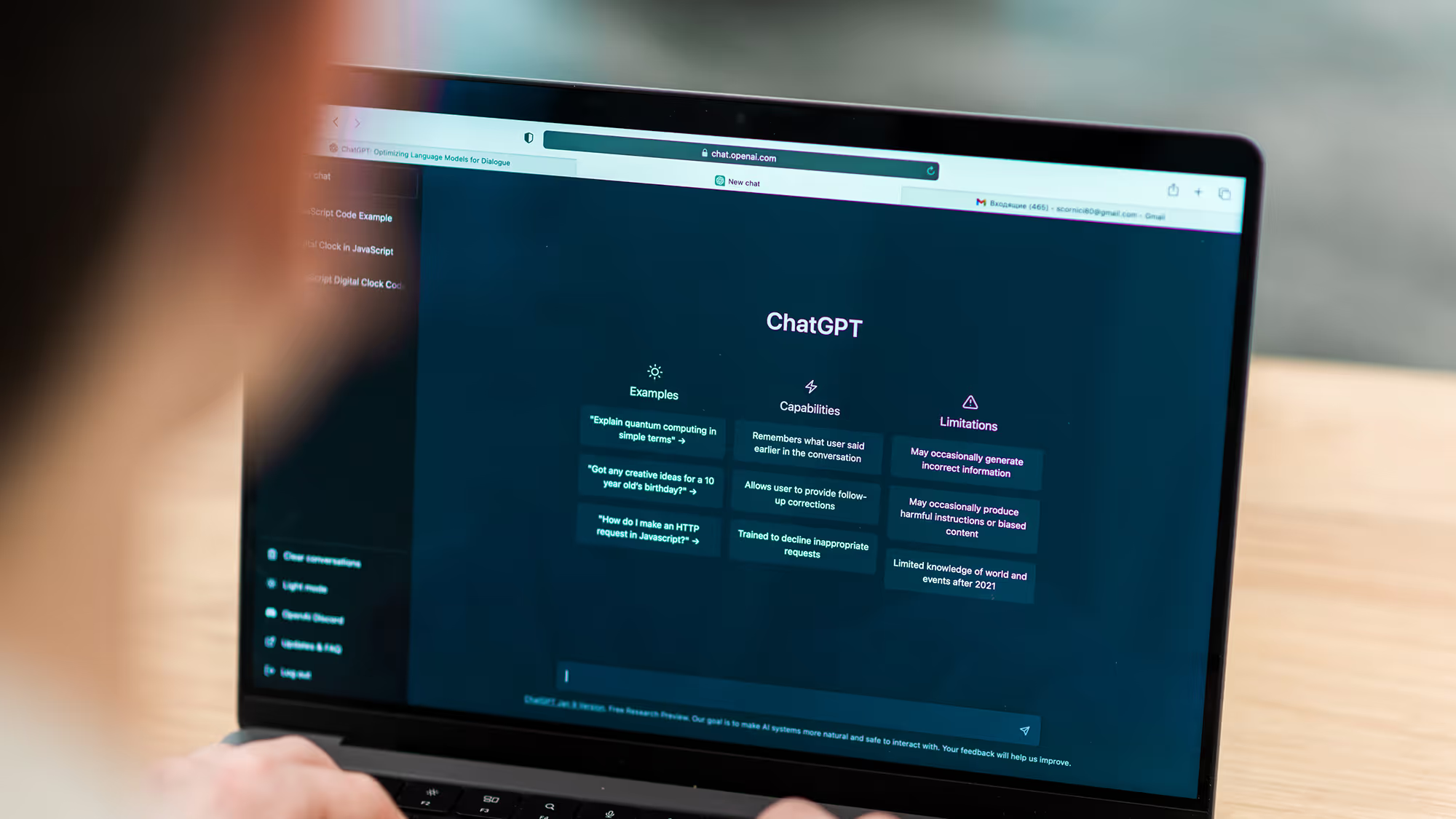
AI is reshaping the way companies hire in the UAE, making sourcing, screening, and scheduling faster, more efficient, and more cost-effective. But while the potential is enormous, success depends on using AI the right way: as a powerful assistant, not a replacement for human judgment. That means being transparent about automated steps, keeping people involved in final decisions, and ensuring every process aligns with UAE privacy and labour laws.
It’s no surprise, then, that the UAE is leading the charge in workplace AI adoption. Entrepreneur Magazine recently reported that nearly 80% of professionals in the country are already using AI in their day-to-day work, one of the highest adoption rates globally.
At Auxilium, we’ve extensive experience in helping organisations hire and deploy workforces across the GCC, from the UAE to Saudi Arabia, Kuwait, Oman, Bahrain, and Qatar. Our experience supporting global brands, recruitment leaders, and tech firms gives us a front-row view of how AI can transform hiring, when combined with the right compliance strategy.
In this guide, we’ll break down how AI recruitment tools work, why adoption is accelerating in the UAE, and the legal considerations every employer needs to know. You’ll also get a practical 10-step checklist to roll out AI safely and effectively.
Why AI recruitment tools are taking off in the UAE
Hiring in the UAE is moving at the speed of AI. Talent teams are under pressure to fill roles faster, cut costs, and compete for highly skilled candidates in one of the world’s most dynamic labour markets. AI-powered recruitment tools are stepping in to do just that, streamlining everything from sourcing candidates to scheduling interviews. But what makes the UAE unique is how quickly organisations have embraced these technologies. With nearly 80% of professionals already using AI at work, adoption is not just a trend, it’s fast becoming the standard for competitive employers.
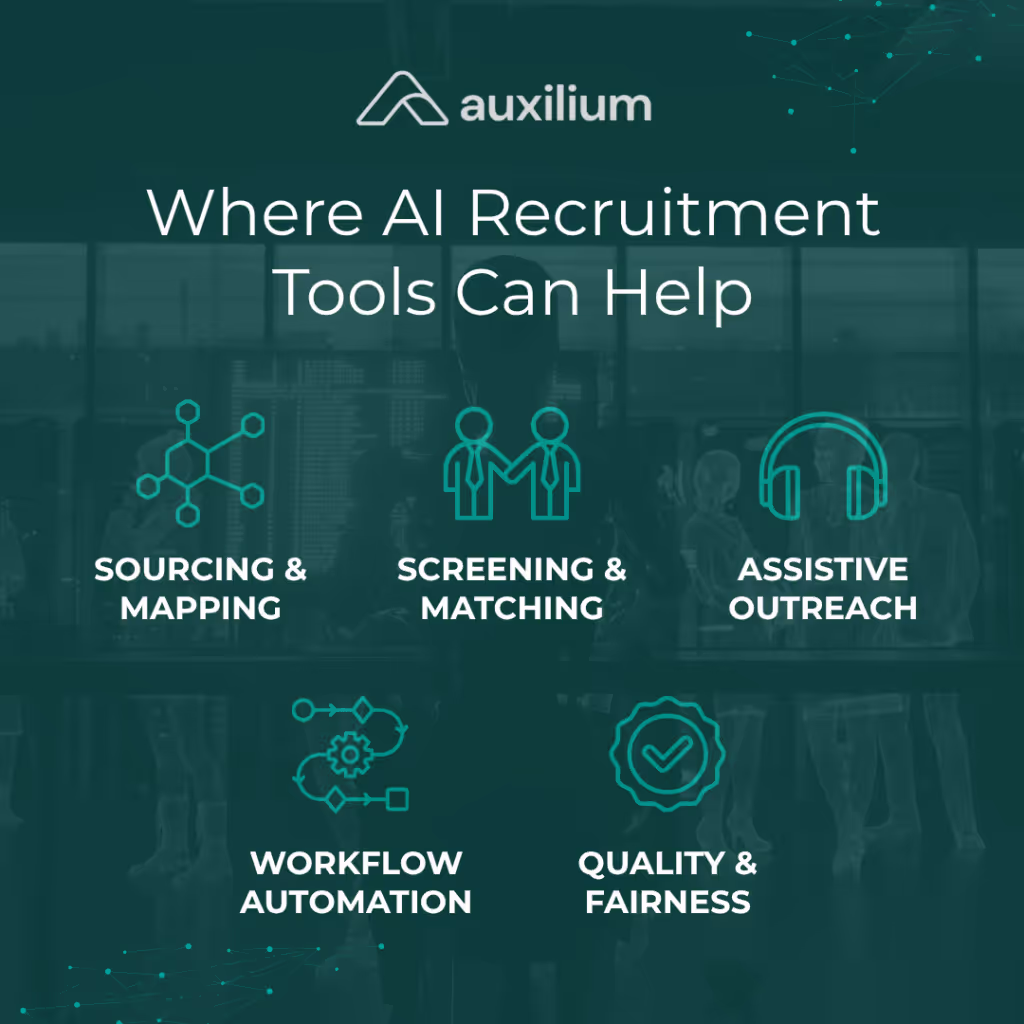
Where AI Recruitment Tools Can Help:
- Sourcing & mapping: AI finds and ranks candidates across job boards, talent networks, and alumni pools; programmatic ads optimize spend.
- Screening & matching: Models parse CVs (Arabic/English), extract skills, and score matches vs. the JD.
- Assistive outreach: LLMs draft inclusive JDs and personalized messages; chatbots answer candidate FAQs 24/7.
- Workflow automation: AI schedules interviews, summarizes calls, and nudges stakeholders to keep time-to-hire tight.
- Quality & fairness: With good governance, AI reduces inconsistent human heuristics and supports structured, auditable decisions.
The UAE legal landscape: what HR and TA leaders must know
Innovation in hiring doesn’t come without rules. In the UAE, AI recruitment tools must operate within a clear legal framework that protects candidates’ rights while enabling companies to modernise their processes. From the Personal Data Protection Law (PDPL) to Labour Law provisions on fairness and equality, and Emiratisation quotas shaping hiring priorities, the compliance landscape is detailed but navigable. For HR and talent acquisition leaders, the challenge is understanding where AI adds value and where human oversight is legally, and ethically, non-negotiable.
1) UAE PDPL (Federal Decree-Law No. 45 of 2021)
- Automated decisions: Article 18 grants individuals the right to request human intervention and challenge automated decisions that have legal or similarly significant effects. If your screening tool auto-rejects candidates, you need a transparent appeal path.
- Sensitive data: Biometric and health data are sensitive—avoid facial-analysis or emotion-detection during interviews unless you have a robust lawful basis and safeguards. Most teams should simply not collect it.
- Cross-border transfers: Transfers outside the UAE require safeguards and may hinge on adequacy or other mechanisms, assume scrutiny and document your basis when using foreign ATS/AI vendors.
2) Free-zone overlays (DIFC, ADGM)
- DIFC: Requires controllers to inform data subjects about automated decision-making and its logic/outcomes; reputable legal commentary notes rights to object and seek manual review in defined cases. If your recruiting entity is in DIFC, align your notices and processes accordingly.
- ADGM: Official guidance on automated decision-making emphasizes data protection principles, rights, and controller obligations—use DPIAs and meaningful human oversight.
3) Labour Law & policy (what intersects with AI)
- Non-discrimination & fairness: The UAE Labour Law embeds equality and non-discrimination; AI that proxies for protected traits (e.g., nationality, religion) risks unlawful outcomes. Audit datasets and features for bias.
- Emiratisation: Targets are rising and enforcement is active, even for firms with 20–49 employees in specified activities. Your AI pipeline must track and report Emiratisation goals and avoid inadvertent filtering of eligible Emirati candidates.
4) Sector-specific tripwires
- Health data: Federal Law No. 2 of 2019 restricts movement/processing of health information. If your process touches pre-employment medicals or health declarations, confirm localization rules before using offshore tools.
- Banking/FS: CBUAE outsourcing standards require strong data controls and regulator access—even for HR tech and cloud tools. Confirm your vendors meet the rulebook.
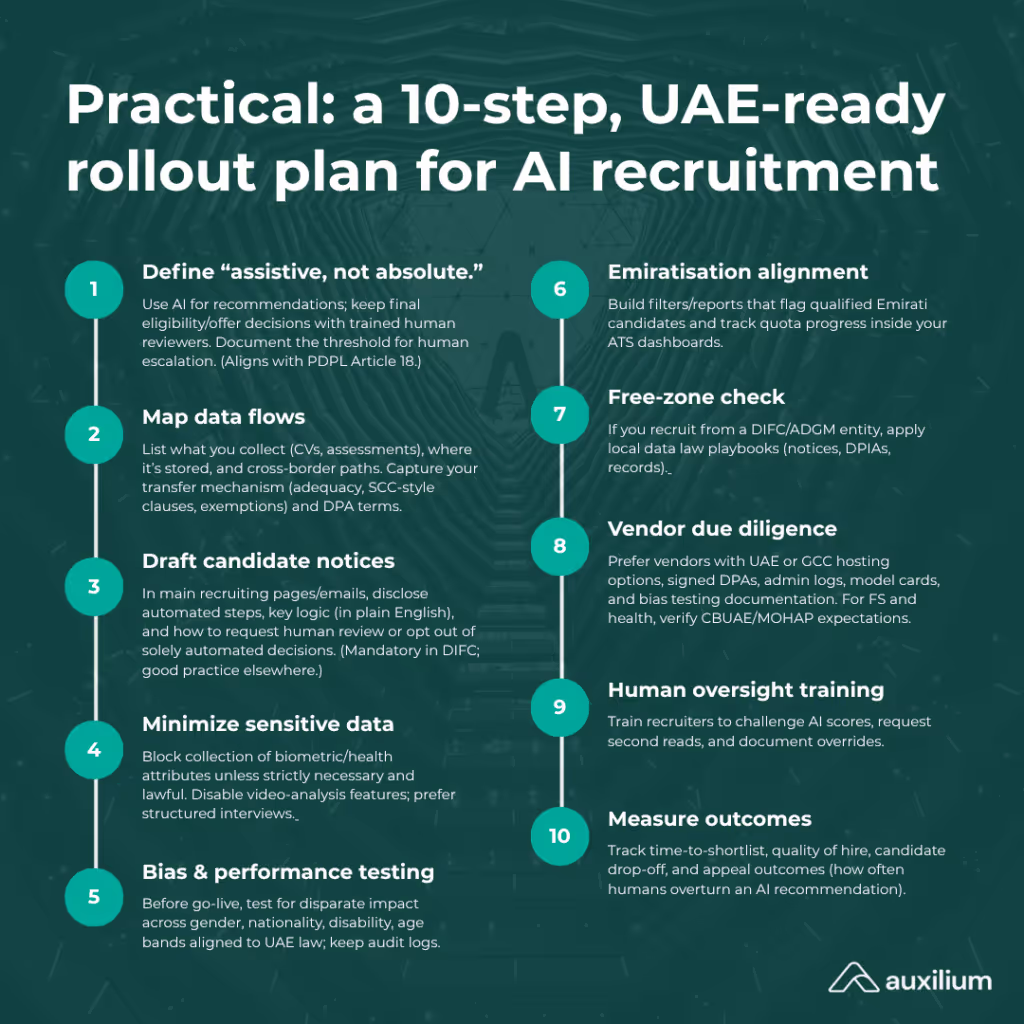
Practical: a 10-step, UAE-ready rollout plan for AI recruitment
Knowing the rules is only half the battle, execution is where companies win or lose. Adopting AI in recruitment requires more than just choosing the right tool; it demands a structured approach that balances speed, compliance, and candidate trust. That’s why we’ve built a 10-step rollout plan designed specifically for the UAE. From mapping your data flows to training recruiters on human-in-the-loop decision-making, these steps give you a practical blueprint to unlock AI’s potential without stumbling into legal or reputational pitfalls.
- Define “assistive, not absolute.” Use AI for recommendations; keep final eligibility/offer decisions with trained human reviewers. Document the threshold for human escalation. (Aligns with PDPL Article 18.)
- Map data flows. List what you collect (CVs, assessments), where it’s stored, and cross-border paths. Capture your transfer mechanism (adequacy, SCC-style clauses, exemptions) and DPA terms.
- Draft candidate notices. In main recruiting pages/emails, disclose automated steps, key logic (in plain English), and how to request human review or opt out of solely automated decisions. (Mandatory in DIFC; good practice elsewhere.)
- Minimize sensitive data. Block collection of biometric/health attributes unless strictly necessary and lawful. Disable video-analysis features; prefer structured interviews.
- Bias & performance testing. Before go-live, test for disparate impact across gender, nationality, disability, age bands aligned to UAE law; keep audit logs.
- Emiratisation alignment. Build filters/reports that flag qualified Emirati candidates and track quota progress inside your ATS dashboards.
- Free-zone check. If you recruit from a DIFC/ADGM entity, apply local data law playbooks (notices, DPIAs, records).
- Vendor due diligence. Prefer vendors with UAE or GCC hosting options, signed DPAs, admin logs, model cards, and bias testing documentation. For FS and health, verify CBUAE/MOHAP expectations.
- Human oversight training. Train recruiters to challenge AI scores, request second reads, and document overrides.
- Measure outcomes. Track time-to-shortlist, quality of hire, candidate drop-off, and appeal outcomes (how often humans overturn an AI recommendation).
What good looks like: a UAE-fit AI recruitment stack (by capability)
Not all AI tools are created equal, and in the UAE, the difference between success and risk often comes down to the details. A truly UAE-fit recruitment stack isn’t just about automation, it’s about alignment. That means tools that can parse Arabic and English CVs with equal accuracy, dashboards that track Emiratisation progress, and built-in safeguards for sensitive data. In this section, we’ll show you what a best-in-class, UAE-ready AI recruitment stack looks like, capability by capability, so you know exactly what to prioritise when building your own.
- Talent intelligence & pipelining: Skills graphs to surface adjacent talent; Arabic/English parsing to improve match quality.
- JD co-pilot: Drafts inclusive, non-discriminatory job ads aligned to Emiratisation pathways.
- Screening & ranking (assistive): Skills-based scoring with explanations recruiters can validate.
- Scheduling & comms: Chatbots to coordinate interviews, confirm documents, and remind stakeholders.
- Analytics: Dashboards for quota reporting, fairness metrics, and “human-override rate.”
- Controls: Role-based access, retention schedules (delete rejected candidate data on a cadence), and exportable logs for PDPL responses.
Adopting AI recruitment tools in the UAE is fast becoming a competitive necessity. The UAE’s policy environment encourages responsible AI, and the legal path is clear: transparency, human oversight, and disciplined data governance. With those in place, AI becomes your team’s unfair advantage in a tight market.
Scale hiring in the UAE without the compliance headache.
Auxilium acts as your Employer of Record so you can deploy AI-powered recruitment confidently. We handle UAE payroll via WPS, visa processing, and end-of-service (EOSB), plus the nuanced, on-the-ground variations across the six GCC countries we know best.
Let’s talk about your UAE hiring plan—so your team can focus on growth, not red tape.
Frequently Asked Questions
AI is used in recruiting to automate and enhance tasks like sourcing candidates, parsing resumes, matching applications to job criteria, scheduling interviews, and generating personalized candidate outreach. It draws on machine learning, natural language processing, and predictive analytics to sift through data faster, freeing recruiters from repetitive tasks.
AI is reshaping recruitment by shifting early-stage filtering and outreach from manual to algorithmic systems, enabling broader candidate discovery and faster decision-making. It adds data-driven insights to hiring choices, optimizes workflows, and allows recruiters to devote more time to high-touch activities like interviewing and relationship building.
AI in recruiting can reinforce existing biases if models are trained on skewed data, lack transparency, diminish human judgment, and damage candidate experience through impersonal interactions. Privacy issues and regulatory compliance also pose risks, especially when handling sensitive personal data or making opaque automated decisions.



Schedule a Free Consultation
Tell us what you’re looking for and we’ll handle the rest.
Let's talk!
Please provide your details, and one of our specialists will promptly reach out to you.